
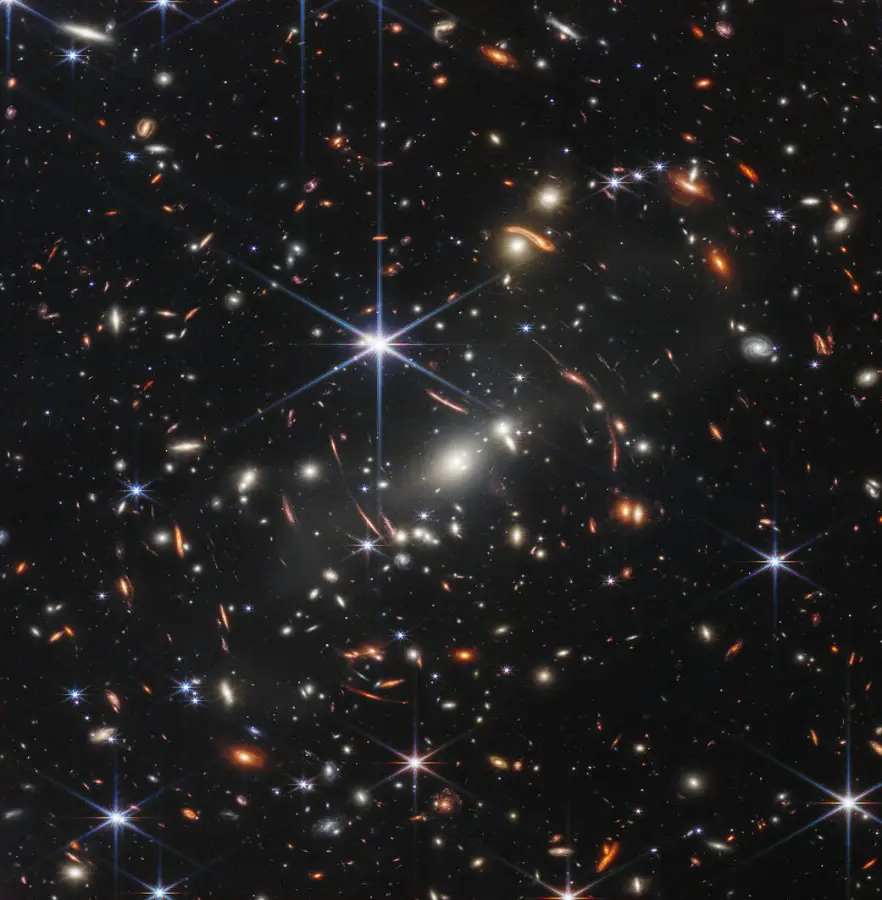
Space has always been at the forefront when it comes to researching its origins. With growing advancements in technology and new tools to help us observe our universe better, we have created a foundation to continue research for future generations. Through one such landmark, such as the launch of the James Webb Space Telescope, also known as JWST, we have advanced further into a realm of exploration.
The launch of the James Webb Space Telescope (JWST) marked a pivotal moment for astronomers around the world. When it sent back its first images of the universe, the quality and historical significance of those photos were mind-blowing for those of us in the astronomy community.
For the first time, we were able to see galaxies fully formed just a few hundred million years after the Big Bang.
Concept Behind the James Webb Space Telescope
The concept behind JWST originated from the desire to observe space in infrared light, enabling astronomers to explore the most distant objects with exceptional clarity while minimizing interference from cosmic dust. Our previous instruments weren’t able to provide quality observations, so JWST was a step up in advancement.
Cosmic dust, which is abundant throughout space, often obstructs the quality of images captured by telescopes. By utilizing infrared wavelengths, JWST can see through this dust, revealing a clearer picture of the universe and various stellar objects.
The construction of the telescope began in 2004, culminating in its launch on December 25, 2021, from French Guiana, South America, at 7:20 a.m.
When I was in college, I remember just before finals, we discussed the mission and the images we were expecting to see. We understood the significance of what was about to happen for the astronomy field. Finally, on July 12, 2022, the first image was revealed. A remarkable image that surpassed the previously known clarity of the Hubble Deep Field, captured by the Hubble Telescope in 2004, of distant galaxies.
Although JWST is still relatively young at just three years old, it holds immense potential for advancing our understanding of the structure of galaxies and stars, paving the way for deeper insights into the universe.
Why JWST Matters For The Future of Astronomy

Subscribe to continue reading
Become a paid subscriber to get access to the rest of this post and other exclusive content.
