
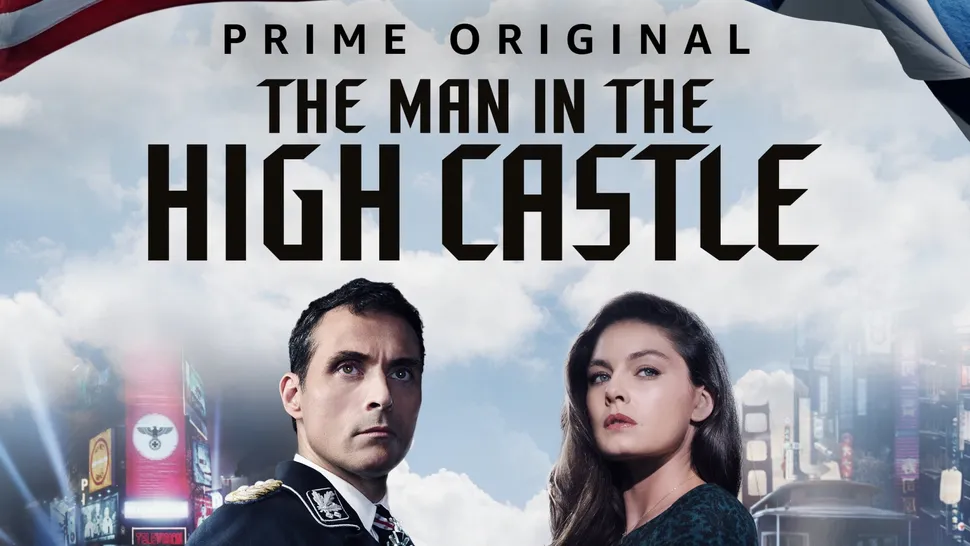
What would have happened if the Axis powers had won World War II?
This question can only be found in the highly praised Amazon Prime series, The Man in the High Castle, which explores an alternate 1960s post-America under fascist rule. Based on Philip K. Dick’s 1962 novel of the same name, the series blends dystopian themes with science fiction and political insight, offering a glimpse into a world that could have been.
I remember starting this series during the COVID-19 pandemic. With everyone around the world on lockdown and many working from home, I was searching for a new series to pass the time, thinking it was going to last a week. At the time, I was particularly intrigued by World War II history. When I was looking for documentaries, I stumbled upon this series on Amazon Prime and was instantly hooked.
I encourage everyone to watch The Man in the High Castle. It’s been about five years since I last watched it, but I still highly recommend it. If you enjoy thrilling and serious storytelling, this series is right up your alley. I find that The Man in the High Castle still has me asking questions about the series’ reality.
If you’re interested in watching it, The Man in the High Castle is available on Amazon Prime.
What do you think our world would look like if history had taken a different path?
Background and Premise
Based on the 1962 novel by Philip K. Dick, this alternate historical timeline showcases a scenario where the Axis powers triumphed in World War II.
The United States is no more! The land once occupied by the colonial descendants of the Old World has now become divided, where the East Coast is controlled by Nazi Germany and the West by Imperial Japan. The series presents a complex political landscape along with a growing underground resistance. At the heart of the story is a collection of mysterious films that depict alternate realities, including one in which the Allies won the war. These films become symbols of hope and danger, igniting unrest in a tightly controlled world.
Main Plot Overview
The story follows Juliana Crain, played by Alexa Davalos, an ordinary woman in Japanese-occupied San Francisco, who finds herself drawn into the resistance following the tragic death of her sister. Along her journey, she encounters Joe Blake, played by Luke Kleintank, a seemingly loyal Nazi agent harboring his own secrets, and Frank Frink, played by Rupert Evans, a man whose Jewish heritage constantly places him in danger. As the story unfolds, these characters must navigate challenging choices between survival, rebellion, loyalty, and truth, ultimately shaping their destinies in a tumultuous world.
As the storyline progresses, each character navigates complex moral dilemmas, with evolving motivations that reflect the show’s central theme: the cost of living under tyranny and the human desire for freedom, even in the darkest circumstances.

The central conflict of the series revolves around the oppression imposed by a fascist regime. I find the thrilling aspect to be the reason why I enjoyed watching this series. I would also like to highlight some important character developments, which are woven into the series’ gradual progression. With themes such as authoritarianism, Nazi propaganda, and the concept of free will, viewers can observe the psychological pressures and social imbalances present in a distorted society.
Themes and Symbolism
More than just a dystopian thriller, the series dives into profound themes: the manipulation of truth, the fragility of reality, and the consequences of unchecked power. America is no longer a governing country, but its lingering ghosts return to haunt the people who now occupy the land. We witness white characters being treated as second-class citizens. For decades, marginalized groups have faced similar repercussions, but this time, oppression comes at the hands of the Japanese post-war.
Similarly, in the Nazi-occupied East, we encounter a world shaped by pro-European or Aryan ideals, which serve as a facade for power and control. Both governing states begin to play into the minds of each of the characters, especially Obergruppenführer John Smith, played by Rufus Sewell. We see how deeply certain ideologies can incapacitate a person from thinking very close-mindedly. Even though it isn’t as outwardly portrayed in the series, racism definitely shows its face in various forms throughout the series.
From general historical knowledge, we understand that Nazism was deeply rooted in anti-Semitism and the promotion of a purity culture. This series invites us to contrast our understanding of Nazi Germany from our timeline with the portrayal presented in this narrative.
A sense of moral integrity and the extent to which propaganda can influence a person’s mindset is evident in Mr. Nobusuke Tagomi. played by Cary-Hiroyuki Tagawa, the Trade Minister of the Japanese Pacific States. Over time, we observe the moral fragility of Mr. Tagomi’s character as the Trade Minister.

He hopes to bring about change in the declining Japanese Empire. However, he is confronted with the stark truth of his actions and beliefs. This situation highlights the significant impact that a message from a particular group can have on one’s decisions. Years after the war has ended, Mr. Tagomi grapples with the question, “Was this worth it?”, a sentiment also echoed by Obergruppenführer John Smith. It is easy to be swayed by certain ideologies; we see that especially when the prospect of a better future is at stake from these two characters.
Additionally, the presence of alternate-reality films introduces a sci-fi element that raises existential questions about fate and choice. Not much is given on the physics of the parallel realities of the worlds portrayed on the films; however, they do set a basis for the multiple theories by viewers.
Production and Style
In terms of production value, The Man in the High Castle is a masterpiece.
Production designer Drew Boughton received high praise for his interpretations of a world imagined in Nazi-flagged Times Square and Japanese-occupied San Francisco. The production designs create an unsettling blend of totalitarianism and 1960s American aesthetics, resulting in a unique atmosphere for the series.
Additionally, the cinematography contributes to a dark, immersive experience, enhancing the show’s haunting tone. The production with the mix of great casting really set the tone of how dreadful life could have been during this time. The direction makes you feel as though you are part of the story. Click here to read more about how Drew Baughton’s creativity brought the fictional world of, “The Man in the High Castle” to life.

Season 2, Episode 3 – Frank Frink and Mr. Childan are observing a vintage artifact book from colonial America.
Overall, Here’s the Truth…
Critically acclaimed in its early seasons, The Man in the High Castle, I see why it was received very well. The series received praise for its storytelling, acting, and world-building from critics and viewers alike. It won several awards for production design and multiple Emmy nominations, including two in 2016 for Outstanding Cinematography for a Single-Camera Series and Outstanding Main Title Design. Spanning four seasons and 40 episodes, the series offers a complete story arc. Each season builds upon the last, shifting from political thriller to philosophical sci-fi while maintaining its core focus.
Without giving away any spoilers, the finale provided a sense of closure that I somewhat anticipated; yet it still took me by surprise at the same time. I was initially reluctant to accept the character development of a certain character, but I ultimately did. Since the series ended, I still find myself contemplating my own thoughts about the future of all the characters.
What happened to them?

Final Thoughts
Long story short, if you’re drawn to dark political drama or fiction that makes you think, The Man in the High Castle is worth it. Its reimagining of history challenges viewers to reflect on freedom, resistance, and how close fiction can sometimes feel to reality.
If you’d like to explore the novel version, you can find it available as an Ebook on Barnes & Noble for just $13.49.

Leave a Reply