
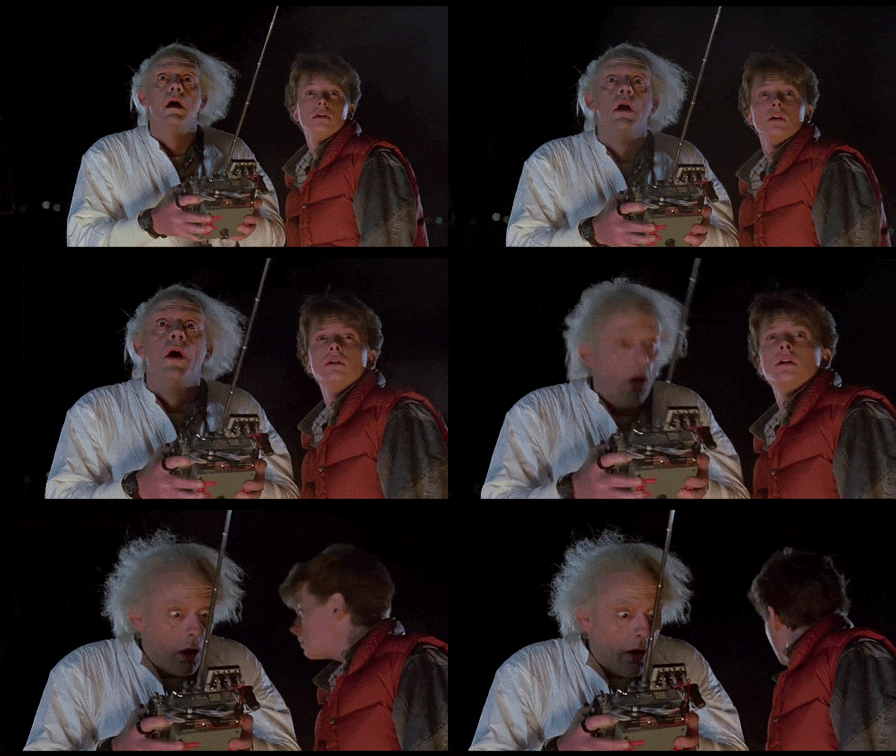
“Beyond the Clock: Science, Divinity, and the Quest for Time Travel”
The concept of time travel and the possibility of exploring alternate timelines is, in my opinion, plausible. If we consider how frequently we ponder whether we are alone in the universe, it becomes an interesting topic. Many people believe that we cannot be the only beings in such a large universe that is steadily expanding. The allure of time travel has sparked discussions for many years, often inspired by films like “Back to the Future,” “The Terminator,” and “Interstellar,” which is one of Christopher Nolan’s most notable works. Furthermore, experiences that we encounter throughout our lifetime, such as déjà vu, can sometimes feel like a nostalgic dream. A dream that makes you feel as if you are experiencing something twice adds to this notion. With these examples in mind, it seems reasonable to suggest that time travel might indeed be possible. However, our current understanding, grounded in the laws of physics, imposes many limitations, and we have not yet found the answers we seek.
Time is typically measured and observed in a linear manner. This perspective is unique to humans and contrasts with that of the Creator, who exists outside of time. However, theological viewpoints, particularly those rooted in Christianity, perceive time differently. Throughout the Bible, there are prophetic declarations that foretell future events. One might envision this as the Book of Revelation, which narrates future occurrences on this Earth. So, is time travel truly possible?

Subscribe to continue reading
Become a paid subscriber to get access to the rest of this post and other exclusive content.
