
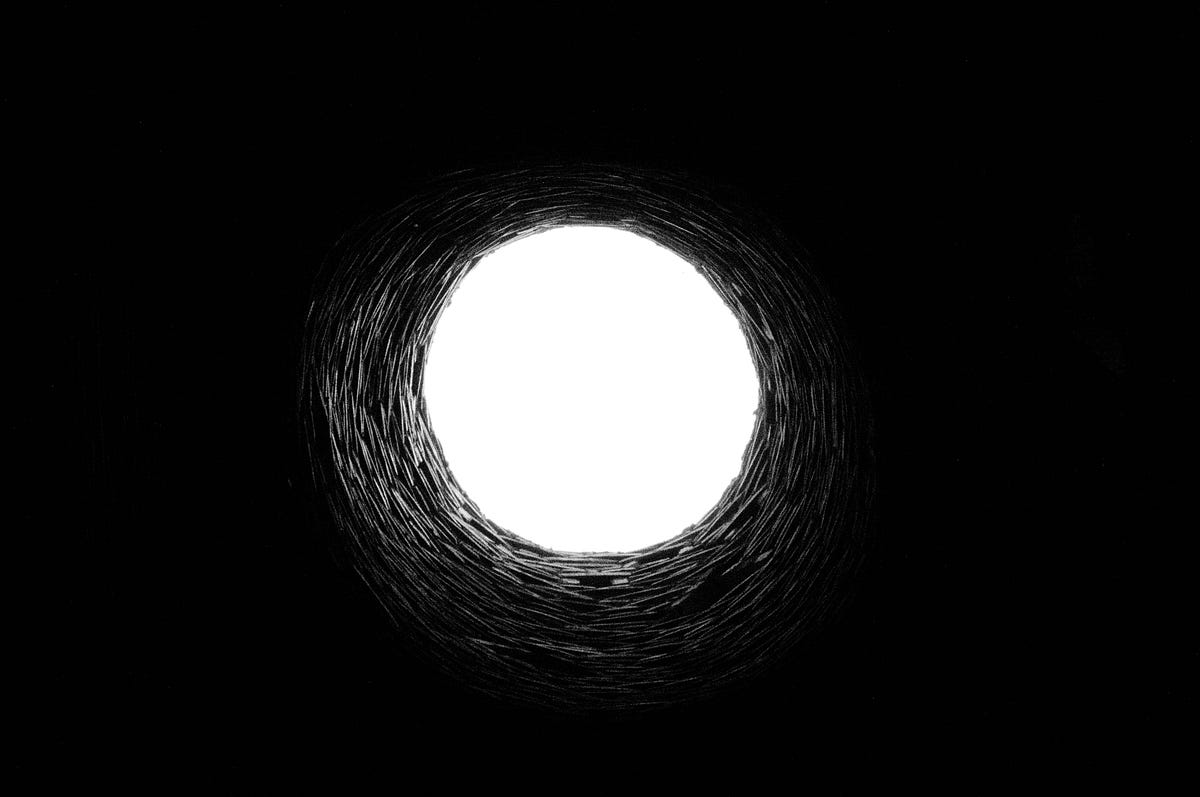
Have you ever thought your reality may not be the same as everyone else’s? Or maybe you are living in a matrix-like reality?
There is so much we don’t know about the universe we live in. Even today, we still grapple with questions that exceed our human understanding, often without finding satisfactory answers. In an effort to gain a better grasp of our world, I want to explore black holes in greater depth. Studying black holes can shed light on how we perceive reality and may help address some of these fundamental questions. I have previously engaged in surface-level research on black holes, but for this article, I aim to consolidate my knowledge and expand my understanding through additional information.
What are Black Holes?
Black holes are one of the most mysterious cosmic objects in the universe; we still know little about them. With technological and scientific advancements, astronomers are still asking questions and seeking answers to space’s most mysterious cosmic objects.
Black holes are vast concentrations of extremely dense matter, all contained within a tiny region. You can think of it like a speck of dust that holds an enormous amount of mass despite its small size. Surrounding this tiny region is what astrophysicists refer to as the “event horizon,” which is simply the boundary of the black hole. You may often hear that light cannot escape from a black hole, and this is true because nothing can ever return to the outside universe once it crosses this boundary. *Gasp*
Reflecting on my own experiences, I’ve always been fascinated by how our curiosity shapes our perception of reality. How do our earthly experiences relate to the vastness of outer space? We’ve studied numerous cosmic phenomena, but black holes remain enigmatic. Could they hold the key to a deeper understanding of our existence? What might they reveal about the nature of our reality and existence?

Subscribe to continue reading
Become a paid subscriber to get access to the rest of this post and other exclusive content.
